
June 2025
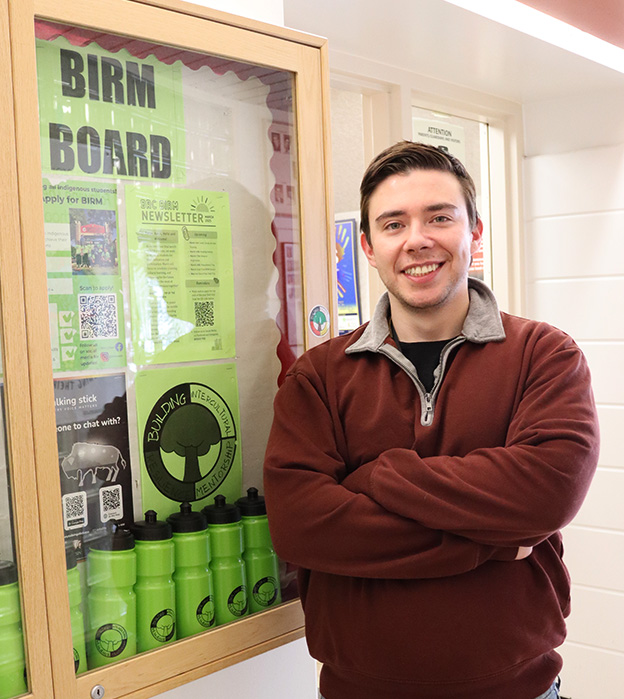
“Being a BIRM mentor for the last three years has been very fulfilling.
I might say it filled up every part of my medicine wheel – spiritually, mentally, emotionally and physically.”
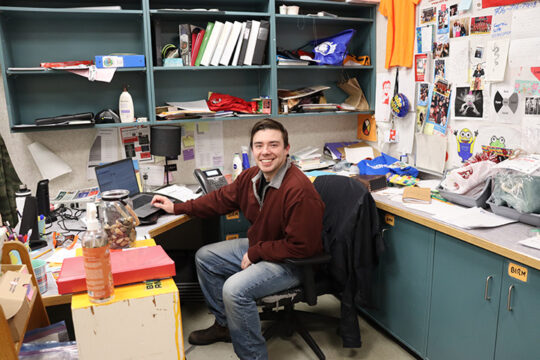
I was visiting the school to meet and chat with Matt Recollet, a teacher and coordinator there. Although his name was on the door as I approached, I initially wasn’t sure I had found the right room. I was expecting the usual understated and minimal décor of a ‘typical’ office, but instead I entered a large room with walls filled with colorful posters and bulletins of all kinds. Seated at both end of two large tables were several high school students; some were eating, some were looking at their phones and chatting, all very relaxed. “Matthew?” I called out. From the far end of the room, sitting at a computer on a desk surrounded by more colorful and busy decor, a person responded, “Yes?”
I introduced myself, and then a look of recognition came across Matthew’s face. We’d met before, having both spent time in various activities with the oyateki Partnership. It’s possible that Matthew didn’t recognize me right away due to distractions from an already busy morning. While teaching classes, he received an alert about a plumbing issue at home that was causing some major water leakage and needed attention asap. After making an emergency trip home and solving the crisis, he was back to work. Although exhausted he was determined to make it to our meeting, a show of dedication that reveals his positive character.
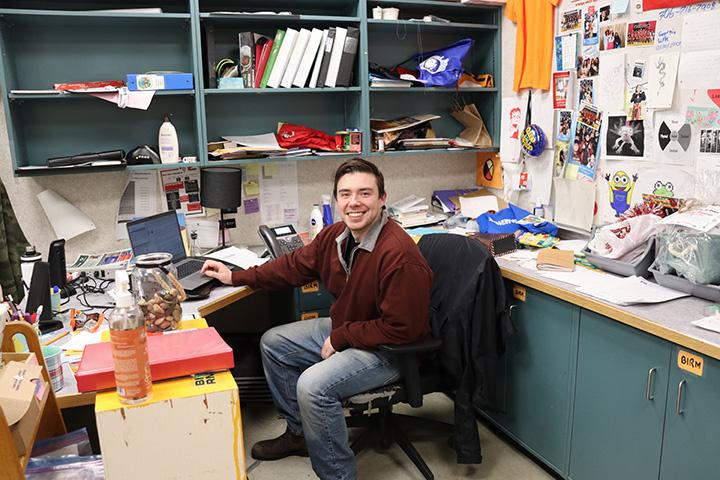
In getting to know Matt though our conversation, it was easy to see that he can roll with whatever comes his way, adapting to the situation with a cool, calm approach. As we talked, I learned more about how he came to be in his role now.
When Matt first came to Saskatchewan from Ontario to attend university, he didn’t know anyone. He wanted to network and make connections with other like-minded people and the students in the Education program.
Part of the reason he chose the University of Saskatchewan (USask) as his post-secondary institution was that a family member had previously been a student there and involved in the Indigenous Teacher Education Program (ITEP) program. Matt is Anishinnabe, from the Whitefish First Nations in Birch Island, Ontario. But not growing up on the reserve or in an Indigenous-based community, his primary source of Indigenous influences were his aunt and mother.
Feeling that he was missing the background and learnings related to his identity, upon his arrival at USask he sought out these resources and joined ITEP. He saw an opportunity as well with the Building Intercultural Relationships and Mentorship (BIRM) program, to become a mentor to Indigenous high school youth in the city.
His instincts were right – the BIRM program became a great avenue for Matt to connect further with his Indigenous roots and work with school aged youth too. BIRM connects post-secondary students with Indigenous high school students in a mentorship format to develop skills, discover Indigenous ways of learning and living, and explore possibilities into post-secondary education and careers. Matt has been a mentor for the past three years, since the program began (check this fact…). He graduated with distinction from USask in the fall of 2024.
Nahanni Olson, Project Lead of BIRM, had got to know Matt well while he mentored for the program. She suggested to him that after graduation he could apply for a new unique full-time position in the city’s school system, half-time teaching position at Bedford Road Collegiate combined with a half-time role as the new BIRM Mentor Coordinator. Matthew was chosen for the role, one he now fully enjoys.
This unique role interested Matthew, having seen first-hand the impact the BIRM program has for both mentors and students. The professional development he had as a mentor prepared him in becoming a teacher, and refining skills like presenting to a group and public speaking. In addition, he experienced many cultural learnings, ceremonies and Indigenous ways of knowing, being and doing, including feasts, round dances, and sharing circles.
He has in turn been able to incorporate Indigenous ways and knowledge into his teaching in the classroom.
“The Indigenous elements have shown up at different times. I started student teaching at Oskayak, so there were more opportunities there.”
Oskayak High School is a First Nations-based high school in Saskatoon. After a short stint there, he started his postiion at Bedford Road.
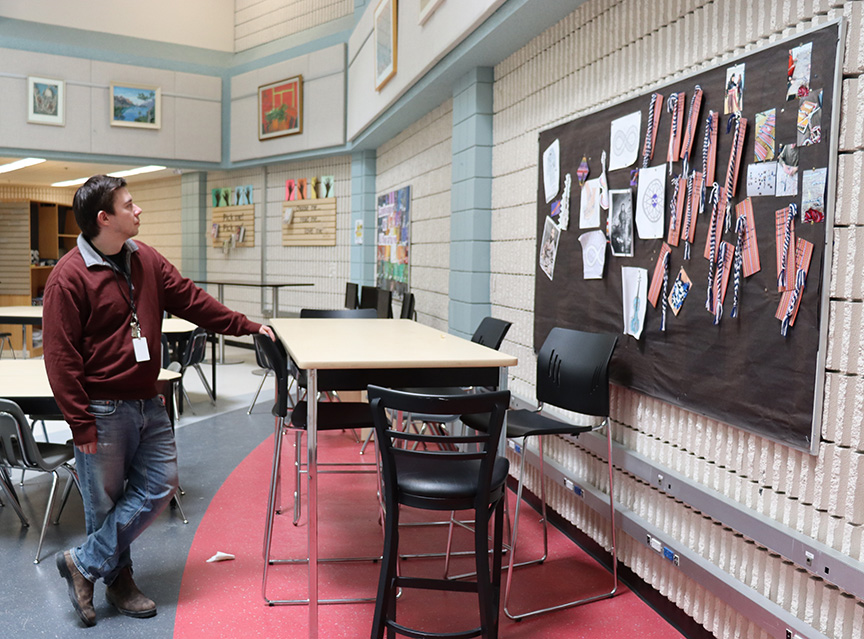
Matt looks at display of Metis sashes and essays on library bulletin board.
Examples of demonstrating and teaching Indigenous ways in the classrooms included a daily smudging, leading smudging circles, learning about land-based, finding medicines in the outdoors, building dream catchers.
Now in his role at Bedford Road Collegiate, he works closely with Elders and continues to gain awareness in protocols, like the giving of tobacco for learnings, leading of smudge and talking circles, identifying native plants, and passing along the 7 grandfather teachings.
a video of Matt speaking will go here.
The school itself is a perfect environment and conduit for this content and methodology – “…the staff are open to ideas and ways that make their students feel welcome and safe.” Matt explains.
As we chatted, a student approached Matt with a food container in hand. Matt paused our conversation to greet him, showing how he prioritizes and values the students. The youth wanted to give Matt his leftover lunch, some nachos, just in case Matt didn’t get a chance to eat. Matt thanked him graciously, and then came back to our conversation. This wasn’t a unqique occurrence – during my visit, any student who entered the room had their questions answered or were offered a juice or snack from the supplies always stocked near Matt’s desk.
He describes how he believes the Indigenous students feel welcome and safe, maybe even more so than in a mainstream school. There’s no doubt that this is a result of a welcoming and encouraging environment that the school has nurtured. However, having staff that match that environment is what brings it all to life – staff like Matt.
The experience of being a BIRM mentor has contributed to the foundation of becoming the strong supporter he is today.
When asked what he would tell other post-secondary students considering entering BIRM, he says,
“I would let future BIRM mentors know that they’ll develop a family, they’ll have those supports in place.
University can be a tough experience. You might get lost in the process.I think BIRM acts as a grounding point. It allows students to form those bonds they need with other mentors, as well as work with students.
Building those relationships is very wholesome, fulfilling and we become like a family.”
The bonds and relationship building are reflected in BIRM’s annual Impact Report: “The mentors want to learn from the students, to hear their stories, learn about their culture, and [let them know] that they believe in them.”
This description on BIRMS’s web page for the mentor role sums up the impact: “To support, inspire, and learn from/with the next generation of Indigenous youth in achieving their highest aspirations.”
It is clear the effects of the BIRM program for the mentors is powerful while in the program.
And as we witness through Matt’s example, the skills in coaching and guiding, the experiences with incorporating Indigenous culture into everyday life, and the unique perspective of providing support and setting an example can last for the journey ahead in an enlightened life.
If you have questions about Oyateki, we’d be happy to answer them and have a chat! Call 306-665-5070, or email oyateki@siit.ca