
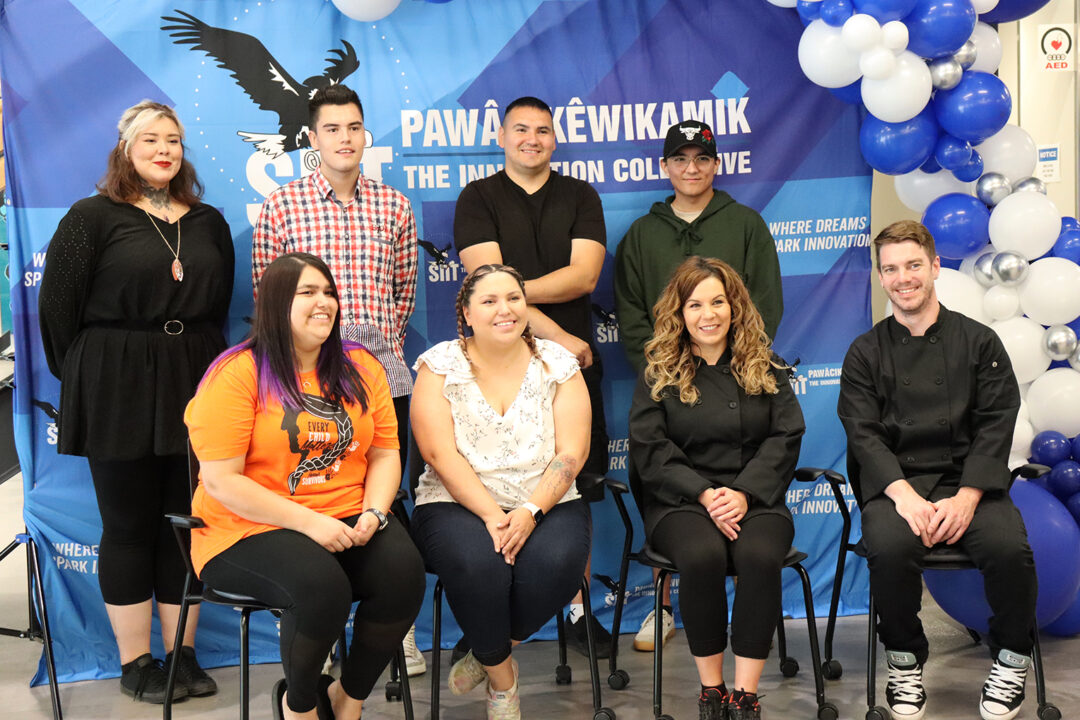
MicroGrants with pawâcikêwikamik: the Innovation Collective
May 2023
“Getting off the ground” is a fitting analogy for a fledgling bird learning how to take flight. The term also commonly refers to a new business that is working to become established. One source defines ‘Getting off the ground’ this way: “To get underway; to get to a point of stable or self-sufficient progress or development.”
This could also serve as the definition of what the MicroGrants at Saskatchewan Indian Institute of Technologies (SIIT) aim to do for Indigenous entrepreneurs. The MicroGrants are part of the pawâcikêwikamik: the Innovation Collective program — the first of its kind in Saskatchewan. Pawâcikêwikamik incorporates Indigenous worldviews in a unique offering of services, teachings, and support. Indigenous peoples have always embodied innovation and tradition. In today’s economy, Indigenous changemakers look for ways to combine traditional knowledge with new ideas to create opportunities for their peoples and communities. Pawâcikêwikamik: the Innovation Collective is an example of the new ways in action.
One of the greatest barriers to starting or progressing a new business is access to funds.
Now starting its third year at the institute, the MicroGrants’ purpose is to provide seed-funding to Indigenous youth planning and starting businesses. Seed-funding is typically used by a startup to finance the initial stages of business development. One of the greatest barriers to starting or progressing a new business is access to funds. The MicroGrants fill this need and help Indigenous youths’ businesses get underway so that they can take flight.
“The microgrant is not just a handout”, Kaylee Macgregor emphasizes. Kaylee is a Program Coordinator for Innovation and Entrepreneurship on SIIT’s pawâcikêwikamik team. She explains, “The potential recipient must first fill out an application, including a comprehensive matrix with details of the plan, like describing the direct costs of the business. The application then goes to the MicroGrants panel to be reviewed and graded.”
Now starting its third year at the institute, the MicroGrants’ purpose is to provide seed-funding to Indigenous youth planning and starting businesses. Seed-funding is typically used by a startup to finance the initial stages of business development. One of the greatest barriers to starting or progressing a new business is access to funds. The MicroGrants fill this need and help Indigenous youths’ businesses get underway so that they can take flight.
“The microgrant is not just a handout”, Kaylee Macgregor emphasizes. Kaylee is a Program Coordinator for Innovation and Entrepreneurship on SIIT’s pawâcikêwikamik team. She explains, “The potential recipient must first fill out an application, including a comprehensive matrix with details of the plan, like describing the direct costs of the business. The application then goes to the MicroGrants panel to be reviewed and graded.”
Need a link to this in here: MicroGrants – SIIT
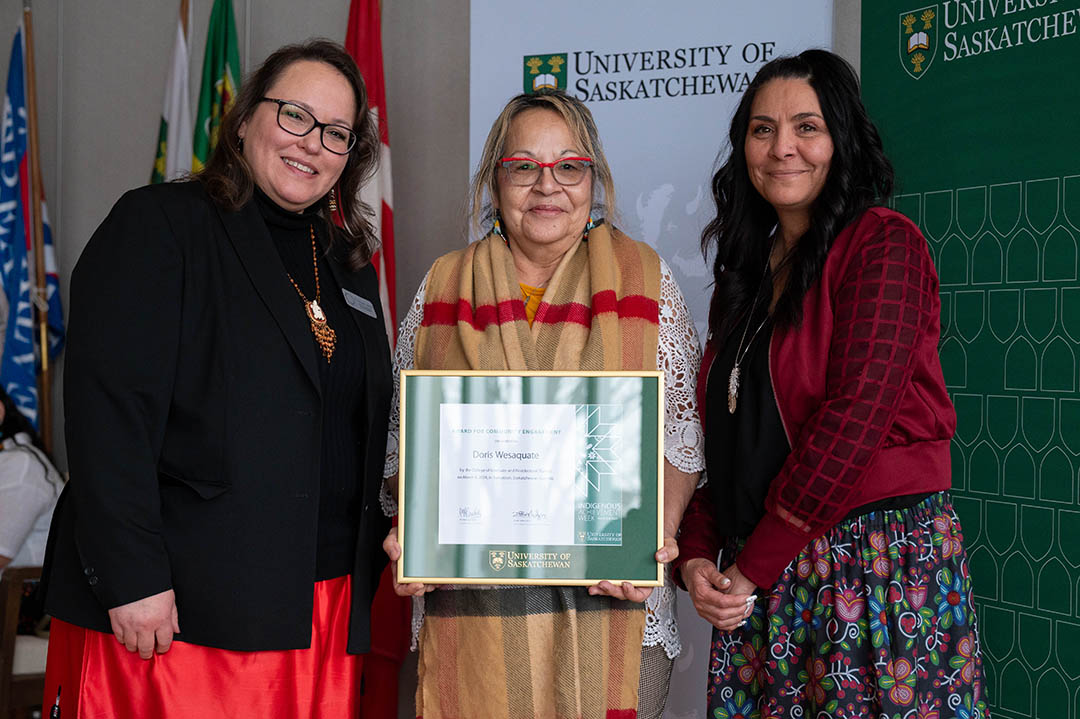
Top: Doris Wesaquate receives an award at the Indigenous Student Achievement Awards 2024 from Dr. Angela Jaime and Lori Delorme.
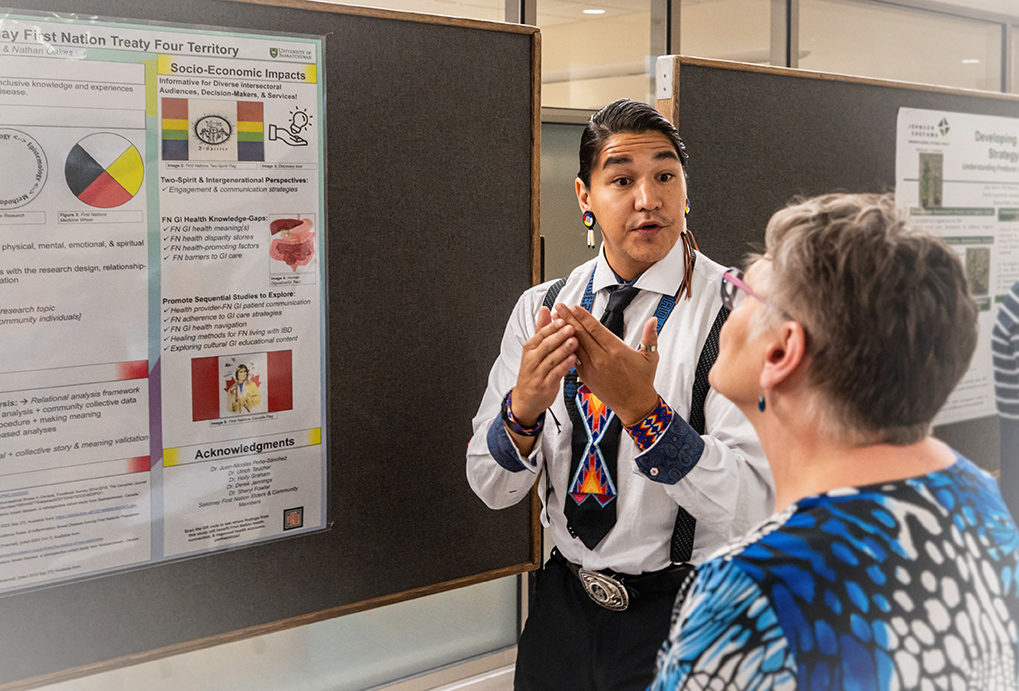
Above: Nathan Oakes discusses his work at the Graduate Research Showcase October 2023.
The MicroGrants panel looks for certain attributes in the applicants. To first qualify, the applicant must be Indigenous and the business is a minimum of 50% Indigenous-owned and operated. In addition, applicants demonstrating that they have the mindset to develop business acumen is important. Kaylee says they look for dedication, commitment and drive.
”We see who has those qualities and who is passionate. That passion is what takes them to the next level.” Grants valued up to $5,000 are awarded to successful recipients.
Pawâcikêwikamik: the Innovation Collective program at SIIT has many facets. Part of the drive is for entrepreneurial growth by Indigenous youth. The MicroGrants assist the entrepreneur’s journey — the funds provide a quick pathway to getting the business started. The funds are suitable in the development of all kinds of businesses, including those that stem from courses taken at SIIT.
”We encourage all staff to tell students about it.” says Kaylee. “For example, a Carpentry 4th Level student who finishes their training may want to start their own business. They can obtain a grant following training that will help them to get started [right away].”
The program isn’t exclusive to just SIIT students, as non-students starting a business can apply as well. Some entrepreneurs who have already taken the first steps in starting a business choose to then enroll in the Miyoskamin: Innovation & Entrepreneurship Program. Miyoskamin helps in defining goals and demonstrates how new technologies and traditional practices can combine for a unique approach to business.
It’s this kind of program offering at SIIT that serves students in an all-encompassing way. In addition to business-related programs for entrepreneurs, wraparound supports are available. ‘Support’ is the key word in the wraparound that pawâcikêwikamik: the Innovation Collective program provides. Students may experience challenges or obstacles in life during their education or entrepreneurial journeys that can affect their progress. Be it emergency financial situations or wellness needs (physical, spiritual, mental or emotional), wraparound services can be accessed to help the student’s unique scenario. It ensures they can focus on their businesses and reach their goals.
“Life happens,” Kaylee says, “and a student may find themselves in need, through no fault of their own. The support we’re able to provide with the help of the Oyateki Partnership is so important to the success of the entrepreneurs.”
With the variety of support for entrepreneurs, from microgrants for startups to Indigenous-based business essentials training to wraparound services, the program provides Indigenous youth with opportunities to reach success with their new businesses.
What is the vision on the road ahead for pawâcikêwikamik’s MicroGrants?
“We’re building an ecosystem and creating pathways. We’re at the forefront of Indigenous Innovation, and when looking 15 years into the future we believe this program will be a part of our economic
reconciliation. We are making that happen, and we’re happy to support Indigenous entrepreneurs.”