
oyateki Partnership will conclude project work June 30, 2026. Learn more about oyateki’s conclusion.
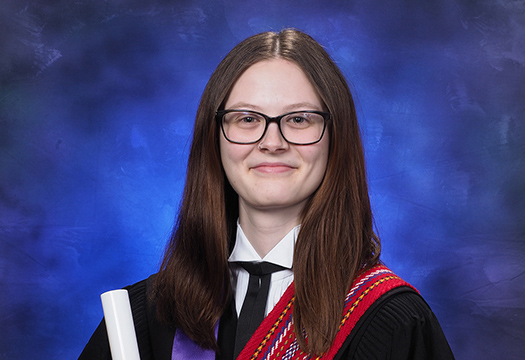
A vision of teaching in an inclusive classroom of students has been a driving force for Kaitryn. She recently graduated from her own studies in the post-secondary Saskatchewan Urban Native Teacher Education (SUNTEP) program. SUNTEP is a four-year, fully accredited Bachelor of Education program offered by the Gabriel Dumont Institute (GDI) in partnership with the University of Saskatchewan (USask) College of Education and the Ministry of Education.

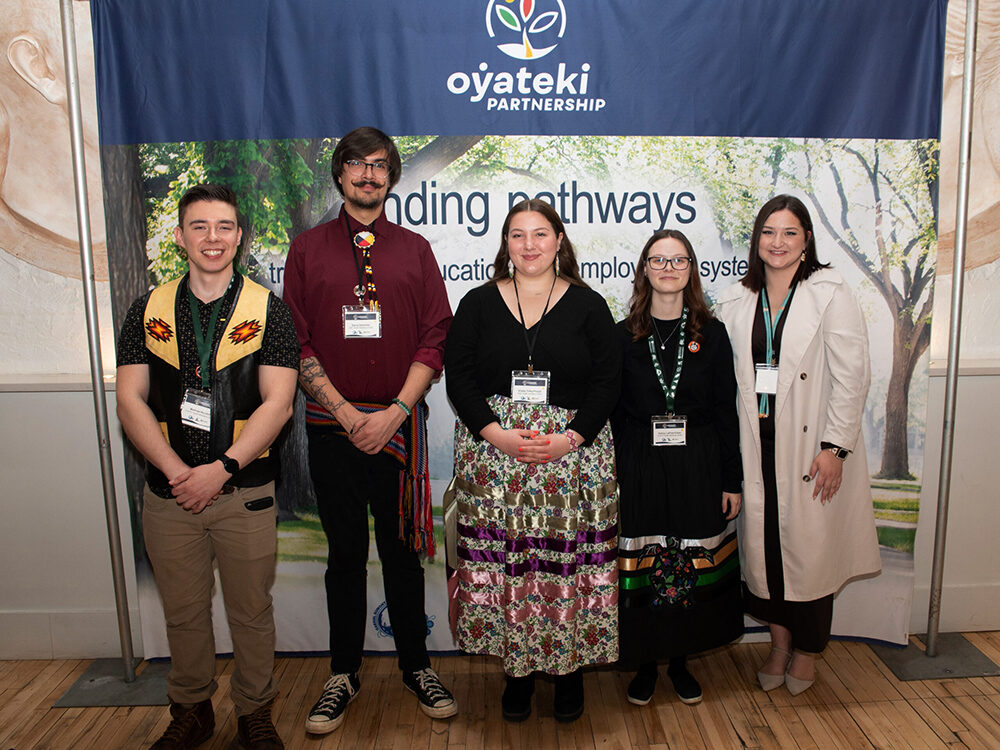
The journey toward living a good life has its challenges and work, and one of the significant milestones to celebrate along the way is graduating from post-secondary education. Shortly after her convocation ceremony at USask, Kaitryn took time out of her schedule to share her experiences, her participation with the oyateki Partnership, and her thoughts on the future.
Can you tell us a little about your background?
My name is Kaitryn LaPrise-Fisher and I’m a proud Métis woman. My family is from Buffalo Narrows and I grew up in Saskatoon. I am Métis on my mom’s side and visit I our family every summer.
What inspired you to choose your field of study?
I was a student with SUNTEP, which is a teaching program for Métis people. I wanted to be a teacher ever since I was in grade 6. Once I was set on teaching, I did everything I could to make it happen.
Who or what has been your biggest source of inspiration throughout your academic journey?
Throughout my academic journey the thing that has been driving me is my future students. My goal is to have an inclusive classroom for all of my students especially my Indigenous students. I want my students to feel safe to share about their culture and be proud of who they are.
What advice would you give to current and future students who are pursuing their degrees/diploma/certificate?
My advice would be to remember why you are doing it and what is driving you to your goal. My journey had some hard times but keeping in mind my goal helped me. Everyone’s journey is different so go at your own pace and put your mental health first.
What were some of the biggest challenges you faced during your studies, and how did you overcome them?
One of the biggest challenges I faced during my studies was doing online classes. I learn best when we are face to face and can communicate easily. The environment of the classroom has a huge impact on my learning.
How did you become involved with the oyateki Youth Advisory Circle (YAC)?
I was enrolled in an Indigenous class at the University, and my professor was Dr. Angela Jaime. She selected me to be a member of the Youth Advisory Circle.
How do you feel your contributions have impacted the community and the goals of YAC?
I have shown my people and non-Indigenous people that I am proud of who I am, and that my people are not going anywhere. Providing Indigenous youth with opportunities will engage them to pursue their passions.

How has your involvement with the oyateki Partnership influenced your understanding and appreciation of Indigenous cultures and community engagement?
Oyateki has influenced my appreciation of my Métis culture by providing a safe place to connect and communicate with my community. I have connected with my fellow Youth Advisory Circle members and have connected with various Indigenous people throughout events.
How do you plan to use the experience and skills gained as a member of YAC in your career and endeavours after graduating?
I plan on continuing to provide Indigenous youth with events that highlight who they are. (These) opportunities to feel proud of their heritage will help build up their confidence.
What does being involved with the oyateki Partnership and the Youth Advisory Circle (YAC) mean to you?
I am very grateful to be involved with oyateki and the Youth Advisory Circle, and representing USask. It has provided a chance to share my voice and point of view. I think it is so important to give Indigenous youth a chance to connect and share with others.